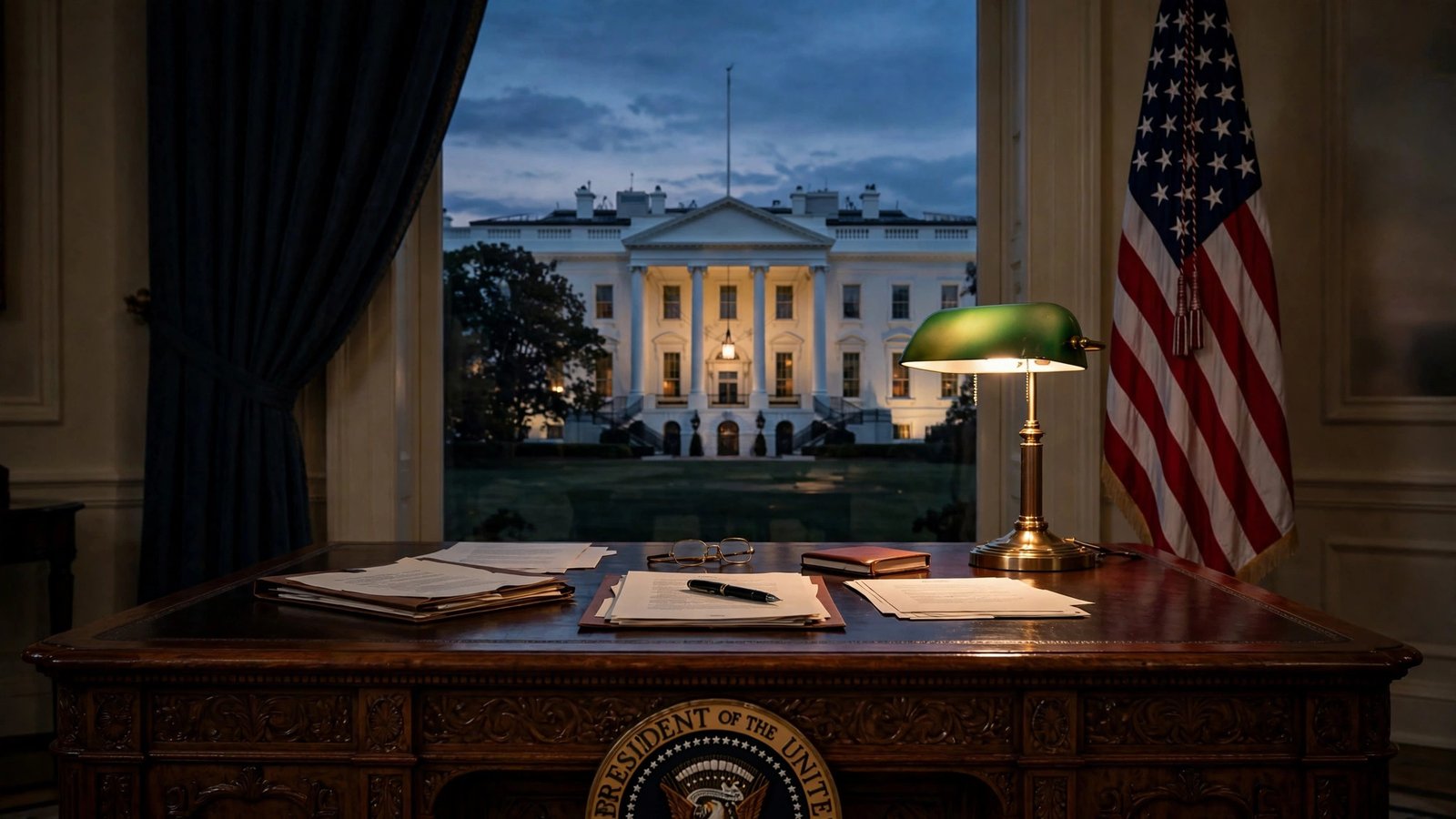
President Donald Trump did not sound like a man ready to step back the morning after the Democrats’ election wins. Calling in to Fox News by phone, he spoke to Bret Baier about the results and made his position clear in one short line: he still has the power of veto, and the Democrats will have to work with him.
It was a defiant message, and it was delivered in Trump’s usual style — direct, confident, and focused on leverage. The Democrats had won races on election night, and the political conversation in Washington had quickly turned to what that would mean for the rest of his presidency. Trump answered that question before anyone else could answer it for him.
His point was simple. A president who disagrees with a bill passed by Congress does not have to sign it. He can veto it, send it back, and force Congress to either change it or find the votes to override him. Overriding a veto is not easy. It takes two-thirds of both the House and the Senate, a much higher bar than the simple majority needed to pass a bill in the first place. In a closely divided Congress, that kind of margin is hard to put together on most issues.
That is why the veto matters so much when power is split. If the Democrats take control of Congress in January, as the midterm results pointed to, they will be able to pass bills, hold hearings, and set the agenda. But they will still need Trump’s signature for most of those bills to become law. Without it, and without the votes to override him, their legislation stops at his desk.
Trump seemed to understand that arithmetic very well. His message to Baier was not really aimed at Fox viewers alone. It was aimed at Democratic leaders in Washington. Work with me, he was saying, because the alternative is a stand-off in which very little gets passed at all.
For Trump, the timing of the remark also mattered. The morning after an election is usually when the losing side is asked what went wrong. Trump did not take that tone. He did not dwell on the losses or offer a long explanation of what happened. He moved straight to the next fight — who controls the agenda now, and on whose terms.
That does not mean the next two years will be easy for him. A Democratic Congress can investigate, subpoena, block nominations, and refuse to pass the White House’s own priorities. The veto does not stop any of that. What it does stop is a Democratic Congress turning its own agenda into law without the president’s agreement.
So the picture Trump painted on the phone was not one of surrender, but of a stalemate with rules. The Democrats won the night, he seemed to say, but they did not win the power to govern alone. If they want bills to become law, they will have to come to the table. And if they do not, he has the pen, and he is prepared to use it.
The coming months will show whether that is a starting point for negotiation or the beginning of a long period of gridlock. Either way, Trump made his opening move clear on the morning after the vote.