President Donald Trump says the war in Iran is “effectively over.” The fighting on the ground and at sea tells a different story.
Trump made the claim on Monday, November 9, after a closed-door meeting in Washington with Vice President JD Vance and Qatar’s prime minister, Sheikh Mohammed bin Abdulrahman bin Jassim Al Thani. Trump said Iran’s military had been destroyed.
“Iran militarily is effectively over,” Trump said. “We’re just keeping it the status quo.”
He added that he saw momentum toward an end to the conflict. “I think it’s going to be ending fairly soon,” he said.
But the “status quo” Trump described still includes a full American naval blockade of Iranian ports, plus a newly announced effort called Task Force Iron Gate, aimed at cutting off trade by land and through the Caspian Sea. Trump called the blockade the greatest in American history, and said the neighbouring countries would prefer it to stay in place.
The strikes have not stopped
In recent days, the Trump administration announced what it called “minor strikes” against Qeshm Island, Iran’s largest island, which sits along the Strait of Hormuz and holds military sites used by the Islamic Revolutionary Guard Corps.
American forces have bombed Qeshm repeatedly in recent weeks, according to The Wall Street Journal. Iran hit back by attacking navigation equipment on Didamar Island, an Omani island in the Strait of Hormuz.
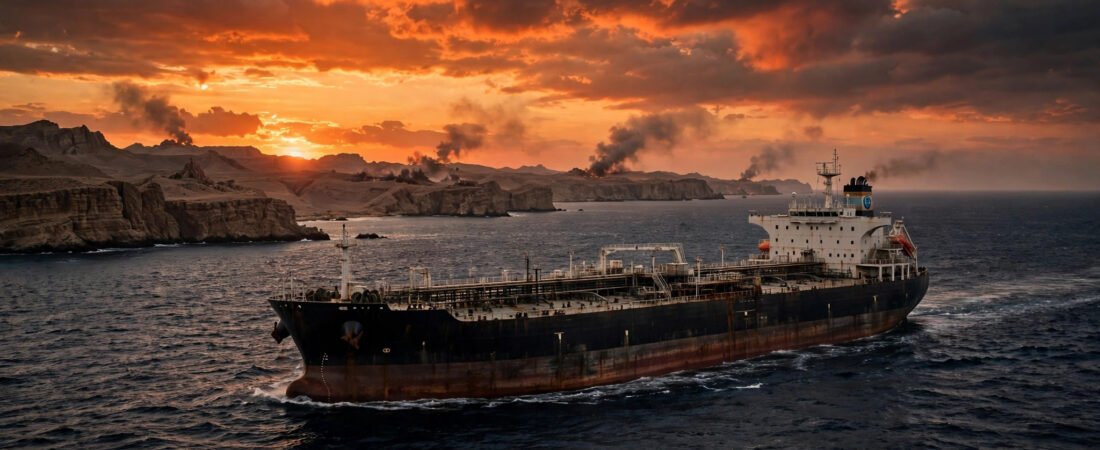
The war began on February 28, when American and Israeli forces launched coordinated strikes against Iran. More than eight months later, commercial shipping is still under attack. There were 37 attacks on commercial vessels in October, the highest monthly total since the fighting began, and at least 10 more in the first 10 days of November, according to Reuters.
The cost so far
The war had cost American taxpayers about $47.1 billion as of October 16, according to an estimate prepared by US Central Command and given to Congress. About $29 billion of that went to replacing munitions that were used up, with another $11.9 billion in operating costs and roughly $6 billion in equipment losses.
At least 23 American service members have died in operations connected to the war, including 11 deaths attributed to hostile action and 12 classified as non-hostile, according to Pentagon casualty records. Another 866 American military personnel have been wounded in action.
The toll inside Iran has been far higher. At least 3,636 people were killed there during the war’s initial phase through early April, including 1,701 civilians and 1,221 military personnel, according to Human Rights Activists. That count does not cover the fighting since then, so the real total is higher.
Iran calls it “fake news”
Iranian officials dismissed Trump’s remarks. Mohsen Rezaei, secretary of Iran’s Supreme National Security Council, called the claims “fake news” and said there were no real talks happening. Iran has said it will only reopen the Strait of Hormuz if Washington lifts its blockade, ends hostilities across the region and meets other conditions, including releasing frozen Iranian funds.
Iran’s President Masoud Pezeshkian said the country was open to further negotiations, but added: “We will not surrender to force and bullying.”
Trump, for his part, said the United States was ready to fight again if anything changed. “We’re locked and loaded, ready to go for any reason that changes,” he said.
That is the contradiction. The president says the war is effectively over. The blockade stays, the strikes continue, and neither side has agreed to the other’s terms. In words, the war is over — on the water, it is not.
Read also: Trump Calls Fellow Republican Massie a Stone Cold Loser After Hegseth Impeachment Push